Showing posts with label MDS. Show all posts

Wednesday, September 24, 2025

Second Day of Vidaza treatment

Todd has had a headache since yesterday, but still has his good sense of humor. When the nurse came to administer the Vidaza she put on rubber gloves and a paper clothing cover gown. Todd's response was, "Wow! You're going all hazmat on me!"

She said yes!  Seriously, they did go through the protocol of dealing with the toxicity of the chemo as it gets flushed out of Todd's body. Basically, the chemo will be filtered out through his bodily functions: urination, bowel movements, and even sweating. This is especially true in the first 48 hours. 

He has to be careful urinating, sitting instead of standing to avoid any splashing. Then he must close the toilet lid and flush twice. The same with passing feces. 

Any vomit or any other fluids must be cleaned up with rubber gloves. Any dirty linens must be washed twice in the hottest water. This includes sheets from any night sweating. 

I told the kids not to use our toilet or lay on our bed during treatment just as a precaution. 

Todd, said great, this stuff is so toxic I have to take all these precautions, yet they are putting in my body!  And, the nurse said don't even think about now all these toxins are in our water!  Todd said, "No wonder I'm sick!  I'll be drinking that water in a few days."  Sad, but likely true. 

Wednesday, March 15, 2017

TODD CADE WENT HOME TO BE WITH THE LORD MARCH 8, 2017


I apologize for not posting on this blog after we returned home from Houston, Texas.  Todd continued out-patient treatment and transfusions at our local hospital, Soin Medical Center, Beavercreek, Ohio, until mid-Febuary, when it came time to start his next round of chemotherapy.  By this point, Todd was having fevers every 6-8 hours around the clock.  We learned that his heart had suffered some damage from the induction chemotherapy given to him to combat the AML back in October, 2016.  We also learned that while the fungal infection in his sinus was gone, the infection in his lung continued to grow into a mass, and then spread even further parts of the lungs from there. 

His local oncologist here in Dayton, was leaving her practice to take a new position in PA.  None of the existing doctors, nor herself, felt that Todd was in any shape to continue to the next round of chemotherapy: 5 days of Decitabine with the experimental regimen of Veneteclax (an FDA approved drug for CLL and Xeljanz (a JAK3 mutation inhibitor in Todd's case).  His counts were extremely low, and what healthy marrow he had left was also being destroyed by the chemotherapy. 

He continued to lose significant amounts of weight.  With no doctor here in Dayton willing to take his case, we returned to The Cleveland Clinic on an inpatient basis the evening of February 10, 2017.  They did a thorough investigation into the fevers, to find out if it was the fungal infection or something else causing them.  They gave him antifungal IV medication everyday instead of three times a week.  They started him on IV antibiotics (Zosyn) around the clock every 6 hours.  The doctors there too concluded that Todd was too weak to undergo another round of chemotherapy, even though Todd's last bone marrow biopsy showed his blast counts had dropped to a remarkable 8%.  There was just not enough healthy cells to make enough good blood cells.  He received transfusions of platelets and red blood cells until the last few days, when the doctors finally decided that he was receiving no benefit from the platelets.  His counts would be like 3,000 in the morning and would only bump to maybe 7,000 in the afternoon, only to have them go back down to say 2,000 the next morning.  He body was just using them up to quickly. 

After a good week of tests and treatments, nothing new was discovered.  Their conclusion was that the fungal infection was the likely source of the infection.  His platelets were too low for a biopsy (nor removal) of the infection in his lungs, and even if they could determine the exact type of fungus, they doubted that they could give him any stronger antifungal, that what he had already been given.  Not only were they treating him with IV antifungals since diagnosis on November 5, 2016, but they added a second antifungal oral tablet called Cresemba about a month ago.  The medications could only do about 1/3 of the work to clear up the infection, his body's own immune system needed to do the rest or 2/3 but he had NO immune system of his own. 

By mid-week the doctors began to tell us the horrific news that they feared there was nothing else they could do for Todd.  Without continued Chemotherapy to treat the MDS, it would go unchecked and progress back to AML.  He blood counts would continue to drop to dangerous levels.  Without an immune system and in increase in his white and neutrophil counts, the fungal infection too would continue to grow at a faster rate than any of the medications could treat.  He was so weak, that he could barely stand up to go to the bathroom.  It was time to talk about "DNR" orders, Hospice, and what major decisions we wanted to make. 

It was devastating.  We laid in his hospital bed together crying; unsure about calling it quits.  We trusted the many doctors who came to talk to us, but we had been fighting this for so long, that it seemed unnatural to stop.  I knew Todd had been growing increasingly weaker since the first of December, and prayed we made it home to Dayton.  He confided to me that he knew it would be his last Christmas.  We cried some more.  Once we made the decision to take what quality time he had left and go home to be with our family, we couldn't leave fast enough.  We wanted to get home to celebrate our eldest daughter's 21st birthday that next day, February 24, 2017.

They discharged Todd from Cleveland Clinic on Thursday, February 23, 2017.  Praise God I was able to drive him home after they juiced him up with two days of platelet and blood transfusions.  We arrived at home that afternoon, where Hospice of Dayton had already delivered the Home Care bed and equipment, and where my brother and father already had the room ready. 

We were blessed to have him at home from that day until Tuesday, February 28, 2017, even though his fevers continued to rage around the clock in cycles of every 6-8 hours of chills, ice packs, and drenching sweats.  Todd was brought to the main campus of Hospice of Dayton that morning by ambulance to receive a blood transfusion to help relieve his symptoms of severe fatigue.  A Hospice Triage nurse had taken a blood draw from the day before and his hemoglobin had dropped to 6.1.  Unfortunately, as soon as Todd was taken from the bed in our home to the gurney, he was in pain and could not take a deep breath.  By the time we arrived at Hospice, he was in severe pain.  After an examination from the doctor there, we learned that Todd's splenomegaly was back with a vengeance.  We were not expecting this!  It was very hard at first for the team there to get his pain under control.  We decided to stay the night and maybe a few more days, until he was more comfortable.  They had tried to access his port for the transfusion, but were unable to.  So they had to set up a pheriphal line in a vein in his hand to give him IV pain meds and finish the 2 units of blood. 

By that evening, he was more relaxed and able to get some long term pain meds (methadone) and short term pain meds (dilaudid) around the clock.  Todd's mind was sharp and his memory spotless.  He was responsive and at times his usual witty self until Sunday, March 5, 2017, when we asked all visitors to stay away and allow just me and the kids to have personal time alone with him.  He asked us to say our peace and he told us his.  We cried together, shared our love for each other, and then he said he couldn't hold his eyes open anymore, he was so tired.  He said to call for the nurse; he wanted to take his scheduled pain medicine and go to sleep.  That night we hung out together as Todd mostly slept.  By Monday, he was much less responsive and couldn't really speak.  This was so hard.  By Tuesday, he was totally unresponsive and his breathing became very hard.  The kids said their evening goodbyes and I refused to go to sleep.  The Hospice nurses moved Todd to a position where I could climb into bed with him and sleep beside him throughout the night.  His breathing was so hard, that it shook the bed.  I was so happy to be with him, but my heart was full of regrets: that maybe there was still something else we couldn't have tried to save him; maybe that I should have been more encouraging to continue the fight and not give in to reality; the realization that he was the bravest person I knew to say goodbye to us on Sunday, and accept that he was going to die.  I couldn't have done this!  I loved him so much!!!

He chose 6:15 a.m. with just the two of us in the room to take his last breaths.  I couldn't believe he was gone.  I felt some peace that he was not in pain anymore, but then I was so sad that I lost the love of my life and our children lost the best father they could have ever had.  I regretted not appreciating him more! 

Here is the link to his obituary:
http://www.newcomerdayton.com/Obituary/133931/Todd-Cade/Dayton-Ohio

We laid Todd's body to rest on Monday, March 13, 2017.  We know he is not there.  He has gone on to his eternal reward with Christ our Lord.  Please continue to pray for the family as we grieve his absence. 

Here is the tribute I wrote and read at his funeral:


Todd gave me the best 25 years of his life! He was greatest husband and father we could have hoped for.  He was faithful, strong, and always made sure we were provided for.  When Todd and I made the decision that I would stay home to raise our kids, he took on extra hours at work by moving into a management position that often required 60 hours per week.  We never did without.  Even in the past two years while he was sick he helped me to sell a few cars on our own to provide some extra income to the family.  Todd always put us first.  He was the adventurous, risk-taker and I was the cautious and conservative one; we balanced each other out.  I was such a realist that he jokingly dubbed me the “dream killer.” His humor and quick wit was his charming tool to add fun to any situation or to disarm any conflict.  His years of service for Christ may have went unnoticed to this world, but not to those he blessed nor to his children, who saw him repeatedly give his limited time to church service to the Glory of God.  He lived his life on purpose and set out to be a blessing to others.  He was always positive and never complained about all the treatments and transfusions he needed these past years.  His optimism was contagious and even in his last weeks of life told the doctors he didn’t understand their pessimism and negativity!  He would have done anything, no matter the pain or cost to himself, if he could buy more time to be with his family.  He taught me so much about life and I had the greatest privilege to be intimately close to him as his wife these 25 ½ years. 
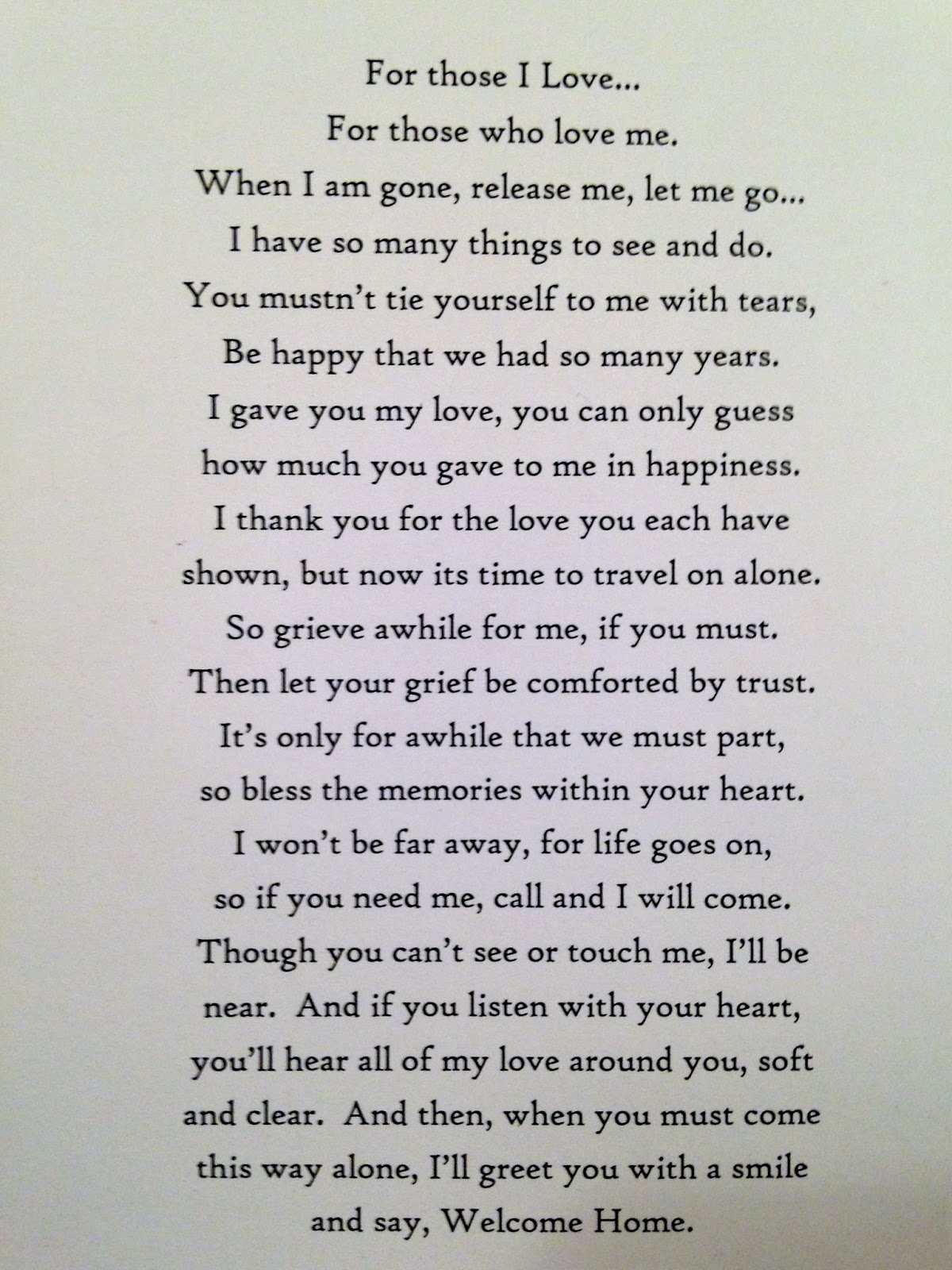
Todd was not very sentimental or romantic, but he still found ways to shower me with love.  He was a steady rock; an oak tree.  He didn’t write or journal much, or didn’t even leave any letters for the future, but If Todd was here, this is what I imagine he would say:

Don’t stand here and cry for me,

I am not here.  This is just the body that housed my spirit and my soul 

I am still with you.  I live on in your memories and through my children; be good to them.

Love them like I would and be there to comfort and support them when they need it. 

I am no longer suffering and we will all be reunited in the Hope of the Resurrection Christ has given to us.

My life was full and fulfilled in every way.  I have no regrets, only gratitude for the life and love that I had.

I love you all. Be full of joy; savor every precious moment of time together; and follow your dreams.
I did recently find a journal in which he wrote a few pages in during our Epic Road Trip out West in 2012.  IT was his bucket list goal and Dream.  (I read a few passages; omitted here).

  I love you Todd!

Friday, November 25, 2016

TODD ADMITTED BACK TO HOSPITAL AFTER KIDS ARRIVAL TO HOUSTON

Group Picture: Picking up Ellie and Lewis at Hobby Airport, Houston

On Saturday, November 5, 2016, Todd woke up with a fever at the hotel!  We were planning on picking up two of our children from the airport for a weekend visit.  I started to take him to the emergency room, but after an hour, it went down.  He insisted on going to the airport with me anyway, but he felt so poorly that I had to wheel him in with his mask on.  The kids arrived and we were so happy!  We got a quick bite to eat, but Todd didn't feel like eating.  I was still concerned and make him pull the thermometer out of his jacket pocket to take his temperature.  He got sweaty and the fever seemed to break for good.  I took him back to the hotel while I took Ellie to the store.  When I got back, I noticed right away that his cheeks were red.  I asked if he was running a fever and he said yes.  I had already packed a suitcase for him earlier that morning and had it in the car just in case.  So we hugged the kids and were off to the ER.

Of course, they got him into a room and said that they were planning on admitting him.  They worked quickly to try to find the source of the fever: blood cultures, chest x-ray, urinalysis, etc.  When the doctor came in I told him I had been concerned that he had 0 platelets, which worried me about bleeding in the brain, or that he had an abscessed tooth from one of those cavities in his wisdom teeth.  He asked if Todd has had a scan of his head since we arrived or even recently, and I said NO!
So he decided to do a CT of the head. 

Sure enough, it was the CT scan of his head that showed a sinusitis infection in his right sinus.  This was not what I expected, or what they were looking for, but I guess it was a good thing that they did it.   The chest x-ray looked ok at this time.  After they got Todd into a room on the Leukemia Floor, I stayed until after 10 p.m. and drove back to the hotel to stay with the kids.  Of course, he needed blood and platelet transfusions too.  Luckily, I had called Todd's cousin Denise who lives in nearby League City earlier in the day asking her to help with the kids if I needed to take Todd to the hospital.  So, she was ready to come get them and take them to dinner.  It was the first time that they met, but they immediately hit it off with Denise and her two adult children Seth and Emily.  I was so grateful!

The next morning, I took the kids to breakfast and we went out to the hospital to sit with Todd. He was doing better.  The fever was down, but they wanted to do a nasal wash to test for the flu along with a second CT with contrast of the right head/sinus along with the upper chest to get a better look. I knew they were calling in a head and neck surgeon and an infectious disease team, but I didn't think they would do much else.  I wanted to spend some "fun time" with the kids, so I took them to the Galleria Mall to look around and get dinner.  I texted Todd and checked on him several times to see if he wanted me to bring him food, but he said nothing about what happened while we were gone.  We walked into the room and noticed dry blood all over the front of his shirt and cotton gauze stuffed up his right nostril!

While we were gone, they sent in a Head and Neck Surgeon to take a look at the sinus fearing a fungal infection; and without any warning or pre-medication, he stuffed a large scissors-like tool up his right nostril to biopsy the sinus infection!  Todd said it was the most painful thing he has ever gone through! After the biopsy, he got up to go to the bathroom, when he had a gushing nosebleed!  The surgeon had to come back in and placing packing up his nostril to stop the bleeding. I felt so bad that I wasn't there; but he said there was nothing I could have done (except insist they give him something for the pain!).  The only good thing the surgeon did do was walk down the biopsy to the lab himself so we could get the results right away.

Todd was very congested after this and having some post-nasal drip after the procedure.  He had been pretty upset at the whole experience and had no appetite.  Before me and kids left to go back to the hotel, the results came back that the biopsy showed a fungal infection!  I really didn't fully understand what made a fungal infection so horrible or what they would have to do to treat it.  The team of doctors immediately wanted to schedule an MRI to get even a better look!  Our first worry was that they would want to surgically remove the infection, but with Todd's platelets so low, we doubted that this was a real option. We learned that a fungal infection can travel to other places like the brain and the eye where it can be extremely dangerous!  We left him in his room about an hour after visiting hours, because the kids were going home the next day and were anxious to spend more time with him.  I had also decided to check-out of our hotel room two nights early.  Since the kids were going home on Monday afternoon, I didn't want to waste resources staying two more nights by myself.  I could just pack a bag and plan on staying with Todd in his hospital room.  I knew this meant staying up all night packing up the hotel room!

I found out the following morning that they had taken him down for the MRI around 1:00 a.m. on Monday morning, November 7, 2016.  Life here for Todd was getting more complicated by the day. After a quick hotel breakfast, I started loading up the car with our things and we all headed out to the hospital to see Todd.  When we arrived, we learned that Todd not only had a fungal infection in his sinus but they also found nodules in his lungs, which are indicative of a fungal infection. They doctors said it isn't uncommon for the fungal infection to drop from the sinus into the lungs.

The doctors continued to treat him with anti fungal IV medication but they want to try giving him white blood cell transfusions to help fight the infections. Todd still has zero white cells to fight it.  They sent a representative in from the blood bank to discuss the process of donating white cells.  We learned that there is no storage bank for white cells since they have no shelf life; they have to be donated and given to him within 24 hours. Unlike transfusing red cells, they don't care about matching the donor cells to the patient, but it is a multi-day process for a donor to get screened and to have their white cells harvested  It is very hard to find donors for this reason and usually only family and close friends are willing to go through such a rigorous process.  I will be going as soon as possible to start the screening process! They really like multiple donors but since we are not local it just might be me only who can donate on a limited basis. We knew that we couldn't ask our own friends and family so far away in Ohio.  Instead, we would have to rely on what family we had here and if we could get the word out to people who had friends and family here that would be willing to help.

I had already planned for Todd's cousin Denise to take the kids to the airport on Monday afternoon, November 7, because Todd originally had out-patient appointments and bone marrow biopsy already scheduled during that time at the hospital. Even though those appointments were now cancelled and Todd had been admitted to the hospital, I didn't want to leave him after I wasn't there during the traumatic biopsy!  The kids, Denise, and her kids went downstairs and had a quick bite to eat.  Then I walked the kids out to the car to get their luggage.  It was hard to say goodbye, but the visit was so refreshing and we all felt better having been together (even though we were missing Abby). 


Large Flag hanging inside the Galleria Mall, along with a view of the ice skating rink and shops.


And just like our time together is gone...

Little did we realize how long it would take to fight this fungal infection.  It was just beginning. 

Saturday, November 19, 2016

Outpatient Appointments with Dentist and Supportive Care Team

Thursday, November 3, 2016: Outpatient appointments at MD Anderson, Houston, TX

Two appointments. One discouraging and one encouraging. The dentist appointment was supposed to be to receive dental clearance for the transplant. Unfortunately the dentist found that Todd's wisdom teeth need to come out or he needs to have two root canals prior to the bone marrow transplant. We knew this and tried to get them taken out in the summer but his platelets started declining after we waited the 6 months for the insurance to cover it. His platelets are still way too low to do any procedures!  I can't see them going up anytime soon. So all the doctors are going to talk and get a game plan together. In the meantime they are giving him headaches and jaw pain.

The second appointment was with the "Supportive Care" team. They will now be in charge of his symptom management: pain, physical therapy, fatigue, and nausea. The doctor was able to give him some medicine to stimulate his appetite called Reglan or Metoclopramide. So I'm hoping this will help with his cachexia and catabolic wasting. We spoke with a counselor and he is going to check in with me from time to time to see how I am coping.  The doctor thought it was best to keep Todd on a low-dose pain medication around the clock instead of just taking something fast-acting that won't last long.  This also means he will need to be on Senna-S to counteract the pain medications causing constipation. 


Cachexia ad Catabolic Wasting:  http://www.lifeextension.com/Protocols/Health-Concerns/Catabolic-Wasting/Page-01

Medication prescribed to increase appetite. 
https://en.m.wikipedia.org/wiki/Metoclopramide


Wednesday, October 26, 2016

October 21, 2016

Things settling down a bit. Yesterday was a rough day.  Todd had a 103 fever and felt hot and lethargic to the point that he couldn't stay awake. I was so worried about him, because it was very hard to rouse him.  Once the fever was gone he felt some better. They moved us Transplant Floor on 17 back to the Leukemia Floor on 16 about 1:15 am this morning!  We have a very small room but hopefully we won't be here long. His counts are very low. Platelets have been 4,000!

Thanks to Kim Bird (my high school friend who lives in Ft. Worth, TX) and her husband John for running out and buying Todd a new pillow and delivering it to the hospital. So many of you have been extremely generous in your support!  We are so grateful. You are the driving force behind us. The wind beneath our wings when we are too tired to do anything but coast. And we are tired of being shuffled around; it's exhausting. It will be nice when we can find a place to settle into.

Todd's Room 1678 Second Admission

October 19, 2016 Rush to ER with Fever and Re-Admission!

It's been the worst, most stressful 24 hours since all this started 4 weeks ago. As soon as we got discharged and settled into the hotel last night Todd got the chills and spiked a fever. Had to rush him to the ER. Luckily, his cousin Denise brought us a car to use just hours earlier. We spent all night in the ER until they got us into a room. Only slept few hours.

I had to go back and get all of our stuff out of the hotel before check out time, but I forgot to grab his "My pillow" from the hotel room. By the time I called and drove back there it was mysteriously gone. Obviously someone took it. Who takes a sick man's pillow? I guess someone at the disgusting Econolodge we had to stay; where homeless people were camped out with shopping carts and sleeping on the ground all around the hotel. I've cried the last two days especially since some people in our lives can only be cruel and hurtful and because I'm too tired and emotional to cope with people.

Todd is still running a fever. It has gotten as high as 103!  The doctor came in and said, "You could fry an egg on his stomach!"  We still don't know why. Thanks to all who have been praying and donating. We really need your support. 

Luckily, I am able to keep all of the things we don't need in the car, in the parking garage.  Parking here is $12 a day, which can add up if we would be admitted for long.  I went to the Social Work Department and complained about the hotel.  I said that the department should not use that place!  Patients and families are already stressed out enough without having to deal with being scared to walk down the road to get food or have to deal with people stealing. 

Before we got the car, we had to take the hotel shuttle to get there.  It was free, but we it took us almost an hour to go 2 miles down the road, because it had to stop and pick up other people from three other hospitals nearby.  Todd was nauseous and could barely handle the bumpy ride. 

If you are reading this blog, and need to stay near MD Anderson, let me tell you to avoid staying near the NGR Stadium/Old Spanish Road area.  While there are shops and restaurants nearby, there are homeless people everywhere, most of whom will come up to your car window to beg for money.  I walked nearby to get us dinner the night we were there and had to pass homeless people sleeping on the ground near the sidewalk.  It is sad; I'm not angry with these people, but I have to admit that it makes me feel unsafe.  I'm already stressed and trying to navigate unfamiliar territory; I need to feel safe. We will definitely be finding another place to stay, even if we have to pay full price for it. 

Some of you recommended the Rotary House Hotel, attached to MD Anderson.  It looks great, but I fear it is too expensive even if we could get a reservation there.  From I could tell when I looked online, it was booked for weeks/months. 

The city is aware of the homeless problem and working to address it, but it looks like a solution is far away:  http://cw39.com/2016/10/20/houston-mayor-accepts-1-million-jp-morgan-chase-donation-to-help-end-chronic-homeless/

October 18, 2016 Todd is discharged from Hospital

Todd was discharged and We were able to leave the hospital late in the day. He had another lumbar puncture and intrathecal chemo treatment this morning. We also learned that they found no cancer cells in the first lumbar puncture!  So that's good news. Todd was a bit tired and nauseated getting to our hotel room but we are settling in hopefully for the next 12 nights. Here is a pic of Todd with one of his nurses Mike who liked to talk Football. This was his bed and our room on the Leukemia Floor.

October 16, 2016 Second LP and Intrathecal Chemo

Because the doctors rounded so late today, they are not going to release Todd until tomorrow afternoon, after they do his second Lumbar Puncture and Intrathecal chemotherapy.

Our social worker has a arranged for us to stay in a hotel nearby for 12 days.  Starting October 30, we will need another place to stay.  I think I found us a small apartment through Eagle's Life Ministries. It is still about 10 miles or 30 minutes away. So, we will need to see if that is close enough.  There are so many complications that can happen, I would rather be closer like 1-2 miles away, but I'm just not sure if we can find something other than a hotel.  Even the small efficiency apartment would cost us $900 per month. All the other places have a 2-3 month waiting list and a hotel every night could get expensive.  Praying for open doors and information.

October 15, 2016 Chemotherapy is done.

Chemo is done!  Todd will likely be discharged on Monday notwithstanding any complications. He still needs transfusions daily so I'm not sure how that is going to work coming in every two days. The low Hemoglobin is not so much a problem if he has to wait a day, but his platelets have been under 10,000 for days. Even with multiple platelet transfusions yesterday they could only get his count up to 7,000. We will likely be staying in a hotel nearby for the first few days to weeks. Pray that God will handle the logistics and keep Todd protected from a bleeding incident or hemorrhage. Pray that the find a donor quickly.  The kids have already completed their HLA blood work along with his other brothers.  Now we wait...

Monday, October 17, 2016

Link To Go Fund Me Page for Todd Cade

Please donate as you feel led and after Prayerful consideration.


Here is a brief summary from the Go Fund Me Page:

Todd Cade was diagnosed with a bone marrow/blood cancer known as MDS in Sept. 2011 at the age of 42.  He underwent a bone marrow transplant in September 2014, but relapsed 80 days after.  Chemotherapy and a trial drug gave him another two years, but in September 2016, his cancer progressed to Acute Myeloid Leukemia. He was transferred from a Beavercreek, Ohio Hospital to MD Anderson Cancer Hospital in Houston, TX where he underwent a special trial chemotherapy regimen to control the AML. 

Now Todd is in Desperate Need of a SECOND Bone Marrow Transplant AS SOON AS POSSIBLE to have any hope of long-term success.  Todd and his wife/caregiver Kimberley need help financial help now to pay for nearby housing, transportation, groceries/food, prescriptions, deductibles, and other medical expenses since Todd will be required to stay in Houston for about 4 more months. All of these expenses are in addition to supporting their three children back in Ohio. 

AML is a deadly cancer and Todd's cancer is resistant to treatment. No other hospital offers the cutting edge treatment that Todd needs.  It would ease his mind to know he can get the life-saving treatment he needs in Houston, TX without causing an additional burden to the family's financial struggles that have resulted from his long fight with cancer.__

Monday, October 3, 2016

MD Anderson

View of Downtown Houston from MD Anderson Room

Thursday, September 29, 2016

We flew from Cincinnati Airport to George Bush International Airport in Houston, TX on a 2 hour 29 minute flight.  We had to pay more for the direct flight out of Cincinnati, but a one-stop flight was going to take between 5-6 hours to arrive.  I knew he could not and did not need to tolerate that long of a flight and/or transfers.  Everything went according to plan.  We had no problems at any time.  Todd had a little pain on the flight, but overall, it was event-free.  Once we arrived, we used Uber to get a ride to MD Anderson.  I called Dr. Benton on the way to the ER to let him know we would be there soon. This was the plan, to go straight to the ER and have him admitted from there.  It took about 40 minutes, but our driver was able to drop us off right at the Emergency Room doors.   The ER was somewhat busy and a bit difficult to navigate with the wheelchair and all of our luggage.


It helped that I had all the registration for Todd done before we arrived.  At the time I was working on it by phone while Todd was in Soin, it was very frustrating.  I remember this process another time I had tried to get an appointment for Todd at MD Anderson in the past, before he got on AG221.  First, the doctor sets the appointment.  Then, MD Anderson calls to get all of your insurance information.  You have to be approved through a "financial clearance" department before your appointment is confirmed.  This part is the real pain.  There were some discrepancies between what our insurance company was telling us and what MD Anderson had found out.  When I called our Anthem Blue Cross and Blue Shield Plan, they said Dr. Benton and MD Anderson were both "in-network."  This meant we would not have to pay anything out-of-pocket because we  have already met our maximum out-of-pocket expenses for the year.  However, MD Anderson's financial clearance department said they had no working relationship with our provider since it was through the Affordable Care Act and not from the State of Texas.  They said they would accept our insurance, but only as an "out-of-network" provider.  We had to agree that we would pay any difference in the insurance company's maximum payment benefit and what the hospital and other providers charged.  So, for example, if the insurance company only allows for $400 for lab work, and MD Anderson charges $600, we would have to pay the difference.  This could add up!  It basically allows MD Anderson to charge whatever they want for their services, without the insurance company having the power to say that is too much or you were contracted to accept our payment of $400 as a maximum charge.  This is where the health insurance system in this country is whack!  So, yes MD Anderson is probably one of the best cancer hospitals in America, but you have to pay for the privilege to be a patient there. There is no check and balance system in place when the insurance provider cannot protest that the hospital is charging too much for services.  Who knows what our medical bills will be after this is all said and done, but how can anyone put a price on life?  I can't.  Todd's life is more valuable to me than any amount of money!

Back to the ER. It was late in the day, about 5:30 p.m., so they were anticipating one or two discharges.  They got Todd a bed in the hallway until a room opened up.  Our nurse was Jesse, and he started getting us settled in.  We had to wait for the ER Doctor, Dr. Veils, to come in and evaluate Todd and give some preliminary orders. I provided her with the medical discharge papers and recap written up by Dr. Kim the hospitalist at Soin.  This was very helpful as it gave a quick review of Todd's history with the MDS and what happened at Soin.  She questioned Todd about his family history, whether there was an any cancer in the family, what he used to do for a living, etc.  They put a pick-line in  his left arm, since they are not allowed to use his port until it is evaluated.  They drew the CBC, did a chest x-ray of the port, performed a EKG, and Dr. Veil had to do an exam of a hemorrhoid that had become enlarged due to all the diuretics they gave Todd at Soin.  While this may not seem like a big deal, it is a very dangerous situation.  Hemorrhoids can become septic in no time.  In fact, it happened to Andy, a man who was next to Todd in the transplant floor at Cleveland Clinic in 2014.  He became infected with C-diff (Clostridium difficile), a bacterial infection that causes severe diarrhea, caused from antibiotic use or spread in hospitals from lack of washing hands, etc.  People with weakened immune systems, like chemotherapy and cancer patients are more susceptible.(C. difficile, 2016).  It quickly caused sepsis and they were unable to use Lasix to drain all the fluids his body started to accumulate when his kidneys began to fail.  I am so sorry to say that Andy lost his life as a result.  He had a loving family, which I was blessed to get to know while we were there. 

They approved his port for use, but kept the pick line in his arm so they could use it for fluids and use the port the for blood draws and transfusions. 

After most of these initial tests were done, we were pleased to learn that Todd did not require any transfusions when we arrived.  The doctors at Soin only had time to give him one unit of platelets instead of two before we had to leave for our flight; we thought he might need the other unit when we got there.  The best part of the ER visit was getting to meet Dr. Benton.  He is awesome!!!  I love his bedside manner, his intelligence, and his relaxed laid-back personality! He hit us with about 7 or 8 good options.  He told us straight out that the AG881 Study was closed here too for now.  They have no slots open and won't have them for about 6 weeks.  He thought this was a good idea, but not necessarily his first option.  His first option is to use a combination therapy of chemotherapy induction to get the cancer into remission.  This could take several weeks.  There were other trial options on or off protocol that could also be used, but he wanted to see what the genetic panel and the bone marrow results showed first, if he can get them back early in the week.  He would like to do the chemotherapy with the intention of doing a second transplant.  He wants to go for the "curative" treatment.  We explained our reservations to the idea of a second transplant:  GVHD, relapse or worse, but he tried to assure us that it was the only known curative treatment available today and he thought Todd would be a good candidate.

We had to stay in the ER Room until about 1:30 a.m. when they finally had a room in the hospital for Todd.  Yes, until then, they were full!  He was admitted on the lymphoma floor, because there were none available on either of the leukemia floors.  It was very comfortable.  I had a murphy bed to sleep on and was finally able to get some sleep, even though they continued to do some tests throughout the night.  One of the weirdest things that happened is when his nurse asked what medications he was on, and could she see the bottles of medication we brought with us. She said there was no since in paying for more medication, if he already had some.   I thought she just wanted to look at the dosage and amounts, but they "confiscated" all his prescription medication!  Without asking!  Two nurses started recording the type of drug and emptied each bottle counting every pill.  We could not figure out what was going on and we were half a sleep.  The next thing I know they had packed up all his medication and made him sign a receipt saying they were giving all the medication to the pharmacy to be stored, and that if we wanted it back, we would have to take the receipt to the out-patient pharmacy and pick it up.  Really?  We had nothing to hide, but wow, were they worried about someone stealing it or patients taking it in addition to what is being prescribed?  Is this where the prescription epidemic has led us?  I later asked the nurse on the leukemia floor about his procedure.  She said they do it so a patient doesn't lose there medications and that we should have been better informed.


Todd in his first room on the Lymphoma Floor.

Friday, September 30, 2016

His early morning CBC showed his hemoglobin at 7.7, which meant he needed 2 units of blood.  Platelets were also low, so he needed platelets too.  Someone from the Research Department came in and asked Todd to consent to allow some extra blood or marrow samples to be used for research purposes.  He has always agreed to this, even at the Cleveland Clinic.  Anything we can do to advance the effort for a cure or better treatment, we are all for!  Almost all of his tests were done in his room.  After 26 bone marrow biopsies, I finally got to watch one take place.  They took several slides of aspirate and then then they used a mini hand corkscrew-like tool to extract the small piece of marrow tissue.   They also brought a machine into the room to do his echocardiogram.  They swabbed his hemorrhoid for testing, took blood for cultures, his type and screen for transfusions, and for the multi-level genetic mutation panel. This one is much more detailed than any other he has ever had in the past.  The only test they had to take him out of the room to do was the CT scan of his spleen.  I felt bad for him.  Just after I ordered his breakfast, they said he couldn't eat because he had to drink the contrast for the scan.  He finally ate afterwards.

Speaking of breakfast, the food here has been very good for hospital food.  It is very helpful too that they provide a guest menu with prices on it so that I can order too.  It is just as reasonable to buy food here than it is going down to the cafeteria.  I have more choices and it comes up the same time Todd's food comes.  I can eat from $3-$13, depending on how much I want.  The only thing I could complain about is the lack of coffee!  At the Cleveland Clinic, the family kitchen area had free coffee, hot chocolate, and tea.  Here the coffee machine is like a vending machine where you have to pay $1.50 for a small cup of coffee.  So, luckily, they have like 4 Starbucks (or at least that is about how many I found in my limited exploration).  I have been going down in the morning and getting my $2.11 medium cup of coffee!  I prefer this delicious option to vending machine coffee! 

I have had a hard time getting a social worker to come up and see me. The sent one to me in the ER, but it was late and I really didn't have my questions ready then.  I needed to learn where to find laundry facilities, a place to shower, store food, etc.  Someone showed me the family kitchen and wrote down where I could find the hair salon and laundry.  The hair salon is for patients only and is run by volunteers.  The laundry facility is on another floor of the hospital tower and has pay-for-laundry machines.  The price is very reasonable; 75 cents per load on the washer and the dryer.  I would likely have to plan on staying there until my laundry was done though.  Things here must be different than Ohio hospitals because they all looked at me like I was crazy when I asked where I could shower.  It has always been my experience that family members were not allowed to use the patient's bathroom facilities.  Here, they are like, you can use his bathroom and shower, duh!  At the Cleveland Clinic, they had a family shower area and a free laundry room, but it only had one washer and dryer for the entire floor; sometimes, you had to wait your turn. 

Saturday, October 1, 2016

We were hoping to get the preliminary bone marrow biopsy results back.  Unfortunately, they were doing a second exam of the results and they were hesitant to release them yet.  The doctor thought there must be something questionable in the results, like calling his disease AML or blasts being at 20% or not. 

His blood counts this day were: Whites .6; Platelets 12,000; Hemoglobin 7.7.  It looks like he has become officially neutropenic with ANCs .29. Blasts in the blood were at 19%.  He received 2 units of blood and platelets. 

The doctor rounding this day, an associate of Dr. Benton, gave us a horrible shock when he came in guns blazing asking us: Why did we come here?  What treatment did we want to do? Did we come only for the AG881?- because that was closed.  We answered, well Dr. Benton gave us several options, but we didn't come just for the AG881.  He said that they would likely discharge us next week, and we would just be coming in for outpatient visits.  What???  This was news to us!  I said well he is requiring transfusions every few days, and what about his spleen?  He answered, we give transfusions outpatients and I could bring Todd in every Monday, Wednesday, and Thursday.  The spleen was still very large, about 28 centimeters, but if they could manage Todd's pain with oral pain medication, etc.  He would be fine.  He said you know you would have to stay here for at least the first round of treatment.  I said yes, we were told that yesterday by Dr. Benton.  UGH! 

I was in shock!  I told him that Dr. Benton hadn't said anything about discharging him so soon.  I'm thinking where is this doctor coming from? Why the inquisition?  I said well, we need to speak to a social worker right away because we flew in; we have no car; no place to stay and had not planned on needing all this information so soon. 

I was so relieved when Dr. Benton came in a few hours later and said that doctor didn't know the situation and wasn't really up to speed on Todd's case, that he had only been able to send him a few emails.  He had no intention of releasing Todd to outpatient care.  What a relief!  I knew that it would be so hard to drag Todd to and from the hospital several days a week in his current condition. 

He begin to discuss Todd's options again in earnest.  His first inclination was to start Todd on a chemo regimen to get his cancer into remission with the intention of having a second bone marrow transplant.  If we are agreeable to this.  We told him the first night that we weren't too excited to do the transplant after the first experience with the quick relapse and poor changes of success for a second transplant with resistant disease.   He said, he understood our hesitation then, but that now we have 15+ months of additional history of the cancer responding to treatment through the AG221 to consider.  This reveals to him more of the "biology" of the disease, that it responded well to a single-agent drug.  He feels that he would respond to a multi-agent treatment, which is what the research is all leaning towards now.  If, we still don't want to do a second transplant, we could look at therapies or trials available to him.  He called these "bridge" therapies because it would likely be another short-term fix to bridge him to the next available treatment in the future.  The main problem with going from one bridge therapy to the next is that when it would stop working, he would likely end up relapsing with the cancer progressing rapidly.  He also stated that it gets harder to put the disease in remission each time there is a relapse and the remissions would become shorter in duration.  It was his opinion that even now, after chemotherapy, the remission would likely only last 6 months or less.

If we went the transplant route, we could have it done here or at the Cleveland Clinic.  He said
that Dr. Hamilton would have to look at his list of donor options since they would not use a related donor again.  He said that she would likely recommend a full match if one was available, instead of just a half or haplo match, even though there is increasing evidence that these transplants are just as successful as full matches.  We asked about which would be best, doing the transplant here versus at the Cleveland Clinic.  Did they have different conditioning prior to transplant or different imonosuppression regimens after transplant than Cleveland?  He said that was a good question, and that it would be a good idea to bring in a bone marrow transplant doctor here as a second opinion consult to make recommendations. 

I told him my main reservation about a second transplant was the unknown mortality rate within the first year or two after transplant.  I was also worried about putting him through all the toxicity of the chemo prior to transplant and then just experiencing another relapse.  He said he didn't think the morality rate would be high.  His only real concern was relapse and GVHD (Graft versus Host Disease).  He said though, that even if the transplant wasn't successful, he would still have all the other trial options available.  I was surprised, and asked if he had a high grade GVHD, wouldn't that disqualify him?  He said, no not usually.  But, I do think we would have to wait a certain about of time after transplant to become eligible for some of the studies.  However, he wasn't concerned about this.

Other treatment options included a drug that targets the P53 genetic mutation we know he has.  Although this mutation can cause additional resistance to treatment, the cells are easier to target because they are marked very specifically.  He described these cells like bank robbers with masks on who robbed a bank, but continued to wear the same mask all the time after the robbery.  It obviously would make the robber easier to catch.  See: https://www.mdanderson.org/research/departments-labs-institutes/departments-divisions/leukemia/clinical-trials.html for a list of trials offered by MD Anderson for MDS and AML.

The other recommendations went by too quickly for me to write down or look into yet.  He did say that he contacted the drug company Agios to see if Todd could start the AG881 trial any sooner.  He said they may be able to move up the next cohort to 4 weeks instead of 6, but it wasn't certain.  This still may not be soon enough for Todd.

Once the genetic mutation panel and bone marrow biopsy results are back, they will have a better opportunity to match treatment options to the specific kind of markers and mutations that Todd has tested positive for, including the JAK2 mutation I discussed in the last post. 

The good news is, we have more options here than anywhere else!  We have a great doctor and we feel very confident that we are in the right place. 

We were moved from the Lymphoma floor to one of the Leukemia Floors right after dinner about 5:45p.m.  Todd's Room and address here is as follows:

MD Anderson Cancer Hospital, c/o Todd Cade Room #G1682, 1515 Holcombe Blvd, Houston, TX 77030

 Remember not to send or bring any plants or flesh flowers as they are not allowed on the floor. 

Sunday, October 2, 2016.

Not much going on today.  Todd's counts were a bit better: Whites 1.0; Hemoglobin 9.5, and Platelets 16,000; with ANCs at .45.  Sadly, there was 23% blasts in the peripheral blood.  No transfusions were needed, however, he started having a nosebleed whenever he stood or sat up, so they went ahead and gave him platelets to help with this. 

I will blog more, when I know more.  I want to close with special thanks to those who have helped us get here financially (you know who you are).  We also want to thank all of the prayer warriors out there lifting us up to our Heavenly Father.  Also, special thanks to Dana Willet, for driving 3 hours up and 3 hours back from the Austin area to visit with us.  And to my high school friend, Kim Bird for driving 4 hours up and back from the Ft Worth area to bring me some supplies, meet Todd, and lift up our spirits.  It takes a special kind of person to drive these long distances to visit! 

References:

Mayo Clinic Staff.  June 18, 2016. "C. difficile infection." Mayo Clinic.  Web.  Retrieved from:  http://www.mayoclinic.org/diseases-conditions/c-difficile/home/ovc-20202264


Saturday, October 1, 2016

TODD ADMITTED TO SOIN MEDICAL CENTER WITH SPLENOMEGALY


Cade Family Picture at Soin Medical Center before flight to MD Anderson on Thursday, September 29, 2016

Todd was admitted to Soin Medical Center on Sunday morning, September 25, 2016 with pain in his left side.  On the Friday before being admitted, Todd was starting to feel a slight pain in his left side under his ribs and on Saturday about 5:30 a.m. he woke up with a terrible pain in his back between his shoulder blades and left shoulder.  He was not running a fever, but had to take some pain medicine to be able to go back to sleep. 

All through the day, his pain in his left side was gradually increasing.  He had to take more pain medicine throughout the day.  He was tired, and was likely in need of a transfusion too.  I ran errands and mowed the grass, until the evening. I spent time online looking for clues as to what could be wrong.  We had a pretty good idea that it was either his spleen, lungs, or pleurisy, according to his symptoms.  He was too tired to go to the emergency room that night, so I told him to try to sleep and we would go first thing in the morning 

Sunday morning, about 8:15, I had a call into his local oncologist.  She agreed that we needed to get him to the emergency room.  She called ahead to let them know he was coming.  We were dressed, out the door, and in the emergency room in less than 15 minutes after hanging up the phone.  I knew he was in significant pain since he wasn't arguing with me about going. 

When we arrived to the ER, they got us right into an room and did a CT scan of his lungs and abdomen and a CBC.  He counts were low: Platelets 9,000; Whites at .9; and hemoglobin 7.9.  They found the source of the pain immediately.  His spleen was about 27 centimeters in size!  The most recent scan performed of his abdomen was from 2015, where it was only about 17 centimeters in size then.  This condition is called Splenomegaly, and it is not common for MDS patients at all.  In fact, it is very rare for it to occur.  But it can occur with Leukemia according to a Healthline article written by Carmela Wint and edited by MD George Krucik.

According to an article written by Radhakrishnan on the Medscape website,
A spleen weight of 400-500 g indicates splenomegaly, while a weight of more than 1000 g is labelled massive splenomegaly. Poulin et al defined splenomegaly as moderate if the largest dimension is 11-20 cm, and severe if the largest dimension is greater than 20 cm.  (Poulin as quoted in Radhakrishnan, 2016).
They thought the saw some possible "infarctions" in the spleen, where the spleen had suffered some damage, and these infarctions can cause significant pain.

Splenic infarction is a condition in which oxygen supply to the spleen is interrupted, leading to partial or complete infarction (tissue death due to oxygen shortage) in the organ. Splenic infarction occurs when the splenic artery or one of its branches are occluded, for example by a blood clot.  (Wikipedia.  2016).

His heart rate and blood pressure were also high.  They gave him morpheme for the pain at first, but it didn't help at all.  Next, they tried Dilaudid, which I had never heard of before.  Apparently it is one of the strongest pain medicines available and they gave it to him through his IV.  This just put a dent in his pain, but did not completely help. 

The admitted him to a regular hospital room by 4:00 p.m.  It was frustrating though because they didn't get started on  his transfusions until about 4:45 that evening.  They started with the platelets, which normally takes about 30 minutes to transfuse, but because our nurse hadn't really transfused platelets before and the floor's protocol for transfusions, they ran the transfusions extraordinarily slow.  She didn't even finish transfusing the whole bag, because she kept underestimating how long it would take to run them, so we had to insist that she finish the bag and not let the platelets go to waste.  I get concerned when platelets drop below 10,000 because there is more of a risk for a brain hemorrhage.  To make a long story short, he usually can get 2 units of blood and one unit of platelets transfused in about 6 hours.  It took 12 hours for them to do it.  This meant the nurse was unable to collect the next required CBC and platelet function draw until after the transfusion.  The lab delivered the tubes for collection at 7:00 p.m. that evening, but they didn't get drawn until 8:00 a.m. the next morning.  I was so furious, I  had to complain. 

They continued to give Todd the Dilaudid through his IV as allowed.  The doctor later added in Fentanyl, a muscle relaxer which seemed to help.  Most of Todd's pain occurred when he tried to take a deep breath and when he moved a certain way.  He had to lay on his back to minimize pain.  At first, we were concerned with how they were going to treat the splenomegaly.  Would they have to take the spleen out?  Could they take it out? His local oncologist also not to do anything with it at a community hospital; instead she advocated talking to Dr. Hamilton in Cleveland to get her input and then maybe have him transferred to Cleveland.  Since, it was the weekend, we had to wait until Monday for doctors to get in touch with each other.  I sent a message to Dr. Hamilton via MyChart and an Email to Sam, his trial nurse for her to see when she came in on Monday.

I called Sam, the trial nurse at Cleveland and Dr. Hamilton at 8:30 Monday morning to let them Todd had been admitted and to discuss a game plan. I finally heard from Dr. Hamilton.  She wanted to consult with Dr. Stein in New York to see if he had any patients who developed splenomegaly after getting off the AG221 trial drug.  She was puzzled too why this had happened since she agreed it wasn't consistent with MDS.  We waited all day to hear from Dr. Hamilton, who had called Dr. Stein's office and was waiting to hear back from him.  It was also her purpose to plead our case of getting the AG881 trial drug open slot.  Before she could call us, I had heard from Emily, Dr. Stein's Research Assistant about 4:08 p.m. on September 26, 2016.  I missed the call, but she left a voicemail message, saying "unfortunately" the drug company was not able to offer Todd a slot in the AG881 drug trial at Memorial Sloan Kettering.

I wasn't too upset.  I figured if it was meant to be, he would have got the spot.  This just meant we needed to discuss other treatment options.  Dr. Hamilton wanted to check out the other trial locations, including contacting her colleagues at the James at Ohio State and others.

I had been doing some research about the spleen, because I really didn't know much about it.  I kept getting conflicting opinions whether it could or could not go down in size. I knew he couldn't continue to go on with his spleen this large, especially since it was causing so much pain.  The first treatment is to treat what is causing the enlargement.

The most helpful way to explain the spleen function was explained to me like this.  The spleen acts like a large lymph node.  When it is fighting off infection or working too hard, it gets enlarged, just like when you get sick and your lymph nodes in your neck or under your arm get enlarged.  The best way to get the spleen to shrink in size, is to treat the underlying cause.  In Todd's case, the spleen is trying to make blood cells that the bone marrow can't make.  It also filters out and keeps bad or diseased blood cells.  This is why it harbors platelets. We had noticed he was starting to need platelet transfusions, but didn't realize it could be the spleen was taking them out.  Therefore, the best treatment for returning Todd's spleen back to a smaller size, is treating the cancer, which in turn will help the bone marrow produce healthy cells and relieve the spleen of over-working.  This is also what has been causing that mysterious cough that Todd had since June.  The enlarged spleen is likely pressing on the diaphragm causing it to spasm producing hiccups and coughs!  I knew that something was causing his cough!  Why did no one think of this!  It was also contributing to the lack of appetite and weight loss.  As the spleen was enlarging, it pushes into the stomach too, leaving little room for food or causes a "full" feeling after only a small amount of food. 

A surgeon was called in, because another option is a Splenectomy or removing the spleen.  This was not a good idea since his platelets made surgery way too dangerous and the spleen offers a second line of immunity that Todd needs.

I saw that some enlarged spleens had been treated successfully with radiation to the area, but Doctor Hamilton was not in favor of this option as it would kill good cells too.  Dr. Laubenthal, his local oncologist also brought up the possibility of using a special drug called Jakafi or Jackavi (brand names) or Ruxolitinib to shrink the spleen.  However, this medication, we learned is very hard to obtain and only works if the patient has a Jak2 mutation (The Story of Jak2, 2016).  This drug is only prescribed  for use with patients with Myelofibrosis (scaring of bone marrow) or Myeloproliferative diseases (when the bone marrow creates too many blood cells), both which can cause splenomegaly.  Although Dr. Hamilton considered that Todd may have developed Myelofibrosis, she rather believed it was just Todd's disease progressing. 

So, the strategy for dealing with the spleen was to manage the pain until treatment for his disease could begin.

Also newly developed, Todd's CBCs began to detect 10-20% Blast cells in the peripheral blood (blood stream).  Usually, this is not a good sign.  It usually means the disease is progressing and blasts are spilling out into the blood stream from the marrow.  The numbers of peripheral blast cells seemed to be increasing daily.  We both had a good hunch that Todd's disease was progressing to AML and felt we should probably seek treatment immediately, which meant going back to the Cleveland Clinic.  Just when we had made up our mind to do this, Dr. Hamilton had another suggestion.  She had referred another patient to Dr. Christopher Benton at MD Anderson in Houston, Texas.  She called him to discuss Todd's case.  They were one of the locations that also had the AG881 trial going on.  He was willing to talk to us and see Todd if we could get to MD Anderson for evaluation.  This was the last thing I had expected.  Dr. Hamilton felt that Cleveland did not have any trials that would be helpful to Todd and that besides the AG881, MD Anderson had multiple choices of trials.  She said that we were welcome to come to Cleveland first to get him stabilized or just to treat him.  Cleveland could only offer "Standard of Care" or the normal treatment options that were available and nothing more.  I couldn't see transferring him to Cleveland Clinic and then to MD Anderson later.  So, I began to investigate our options of getting Todd to MD Anderson. 

At first I tried the Corporate Angel Network, but they did not have any flights going anywhere within 200 air miles of Houston that week.  Next, I checked commercial flights.  If we flew sooner than Friday morning, they would be expensive but doable.  The social worker at Soin was able to work with our insurance company to get Todd a smaller wheelchair called a transit chair just in case I needed to get him there myself.  Todd wasn't eating well (less room in the stomach with the spleen pushing in on it) and was needing constant transfusions and pain medication.  The doctors, including Dr. Kim, his hospitalist, worked to get him off the IV pain medications and on long-acting oral pain medication (Oxycontin), so he could be discharged from Soin and sent to MD Anderson. 

By Wednesday morning, I was so worried about Todd and after talking to Dr. Benton the night before on the phone, that we both felt it would be safer to send him by a hospital-to-hospital transfer.  So, we both started looking into that.  Unfortunately, after the social worker got three quotes from air transport companies, we were unable to pursue this option since it would cost $14,000- $16,000!!

I was determined to get him there myself and 7:00 p.m. on Wednesday, September 28, 2016 I had booked us one-way tickets on Delta Airlines to Houston for Thursday afternoon. With the help of family and friends, we were able to pay for the tickets, have money for transportation and food.  All three kids were home or out of school long enough for us to spend the rest of Wednesday together.  I headed home late that night and stayed up packing until 3:00 a.m.

My parents picked me up around 8:30 Thursday morning to take me to get Todd.  The kids, and Todd's mom, and half brothers were there to say goodbye. Todd's brother Tom had already been out twice to see him, including the night before.  It was bittersweet.  I was happy to be taking him to get treatment and felt optimistic, but it was so hard to say goodbye our awesome and loving children and family.  There were many tears.  I felt comfort though knowing we were doing the right thing.  That the New York door had closed, and this door opened.  We felt peace about the decision, that this is what God had in store for Todd's treatment. 

Todd with brothers Paul (L) and Patrick (R)
Todd with his Mom, Anna Durdines
Todd with my Dad and Mom Darrell and Donna Norrod


References:

Dilaudid.  2016.  Drugs.com. Retrieved from:  https://www.drugs.com/dilaudid.html

Wint, Carmela.  Reviewed by Krucik, George. (2012). Healthline. Retrieved from: http://www.healthline.com/symptom/enlarged-spleen

Radhakrishnan, Neetu.  April 29, 2016.  Medscape.  Web. Retrieved from: http://emedicine.medscape.com/article/206208-overview

Spleen Infarction.  Aug 9, 2016.  Web.  Retrieved from: https://en.wikipedia.org/wiki/Splenic_infarction

The Story of Jak2.  2016, Cure Forward.  Web. Retrieved from: https://www.cureforward.com/stories/gene-stories/jak2/

Wednesday, September 21, 2016

CELEBRATING 25 YEAR WEDDING ANNIVERSARY AND GETTING TO NEW YORK


Today is our 25th Wedding Anniversary
September 21, 1991- 2016

PERSONAL NOTE:
It was a whirlwind courtship, but today we celebrate 25 years of a life together that has brought us many blessings and challenges. I would like to wish we could have another 25 years together, but none of us are guaranteed a tomorrow. No woman could ask for a better husband than Todd. He worked hard and has always devoted his life to God and his family. Cherishing every day and praying we have many more years together. So thankful our marriage was blessed with the greatest 3 kids we could ever hope for.

GETTING TO NEW YORK FOR TREATMENT:

Trying to get Todd to New York on a budget is proving challenging.  I’ve done it once before, and I’m going to have to do it often if he gets accepted in the trial for AG881 at Memorial Sloan Kettering (MSK). 

At first, the receptionist for Dr. Stein at MSK told me that Todd would have to come in two separate dates: one for the consult and another for the screening and by the way, Dr. Stein was only in on Mondays and Thursdays.  I told her that we had seen the doctor before in a similar situation when he was getting screened for AG221, and that we were able to have back to back appointments, one day for the consult and the next day for the screening so that we could do it all in one trip.  I explained that we were coming from Ohio and why should we have to come on two separate occasions and have to schedule 4 flights instead of 2!    This was Thursday, September 15, 2016 when she called to schedule Todd’s first appointment set for Monday, September 26, 2016.  I called back the next day and tried to convince them to let us have too appointment dates back to back.  She said she would give the message to someone on Dr. Stein’s team.  I didn’t hear back from anyone that day, nor Monday morning.  So, I called back Monday and reiterated the circumstances and said I never heard from anyone.  She said she would send out another message and have the doctor or someone on his team call me back.  His trial assistant, Emily called back later that afternoon and said of course we only needed to make one trip and that we could do everything in one day!  She said they make this exception for patients who travel long distances!  Hello?  Why didn’t the office person tell me this to begin with? 

There are still a few concerns about being able to keep the Monday morning appointment there.  First, it is at 9:40 a.m.!  That means we would have to get up very early and drive to Cincinnati or Columbus to get on a Corporate Angel Network Flight (CAN), if one is available and can get us there that early with a 45 minute drive into the city!  Corporate Angel Network cannot request a flight until 3 days prior to departure.  We can’t go up the night before because none of the corporations on the network fly on the weekend.  I won’t hear back from CAN until Thursday or Friday at the earliest to see if they are able to secure us a flight.

Second, MSK is waiting to confirm that they can add Todd to the new cohort of the trial which opens on that day, Monday, September 26.  They have been reviewing the current cohort and there can be delays if there are any concerns.  Emily is supposed to call me back and let me the status of this.

COHORT:  A group of persons or animals of the same species with a common characteristic, set of  characteristics, or exposure, who are followed for the incidence of new diseases or events as in a cohort for a prospective study. (Segen’s Medical Dictionary, 2011).

Third, getting lodging once everything is confirmed is also on hold.  I hate to book a hotel room until we get the first two confirmations.  I tried to get the social worker at MSK to work with the Hope Lodge there in New York City to reserve us a room.  However, after hearing back from the social worker today, we were informed that we would need a minimum stay of 3 days of “treatment” before we would meet the criteria for staying.  Since we only need one night this time, it’s a no go.  I did tell her that we may need to stay 3 days later, once the trial starts, but it won’t be often. 

From what I gleamed from Emily, Todd would have to start the trial with a Day -3 scenario, like he did with the AG221 trial.  This is the part where they experiment taking the medication with or without food and then do hourly blood draws for 10 hours.  I remember these days from the last trial with dread!  Talk about a long day, especially for Todd, in his current condition of severe fatigue.  After the first week, we would have to return weekly for the first month.  After the first month, appointments every two weeks for the first 4 months.  Then, just monthly appointments!  This is a much easier schedule than with the AG221 study at Cleveland where Todd had appointments for every two weeks for the first year!  That was crazy; but, you do whatever it takes!  Todd was doing so well on the drug, we hated to complain!

None of this preparation can happen fast enough. Todd continues to struggle with fatigue and lack of appetite.  The local oncologist wanted Todd to start coming in the day before transfusions to get the CBC and type and screen. This is supposed to give the blood bank a day to obtain and prepare the blood products ahead of time.  Plus, they have never liked the idea of making Todd wait for hours for the blood to get to Soin from the blood bank. 

Dr. Hamilton, in Cleveland, did not want Todd to wait 7 days to get a CBC because his hemoglobin was so low the last time they waited a week.  Arrangements were made for him to go in late Monday morning, September 19, to get the CBC and type and screen done and to have blood drawn for a special myelo-mutation panel that would identify all genetic mutations, not just the IDH-1 or IDH-2.  Dr. Hamilton wants to use this as a tool for finding any other studies that Todd would be eligible for, based on the mutations he has.

The results of the CBC were disappointing.  Less than 5 days from his last platelet and blood transfusions, his counts were so low that he needed another 2 units of blood and 1 unit platelets again!  His hemoglobin was at 7.5; platelets at 12,000; Whites at 1.1; and ANCS at 0.6.  They ordered his blood products for the transfusions set up for this morning, Tuesday, September 20, 2016 at 7:30 a.m.!  This is very early for Todd.  It took the nurses a good hour and half to get him situated in his Universal Care Room and have the blood brought in.  He didn’t have to be there until 6 or 7 pm today, but he was still there until 2:10 p.m.  It still took him about 7 hours to get the transfusions.  I’m not sure if it was really any better for him to come in two days, but I guess it was better for the hospital and staff and maybe the blood bank, I don’t know.

I think we have decided to put our house back on the market again.  A realtor came to the house and we will be in repair and clean-out mode now for some time.  Apparently, the inventory for houses in our area is low, but the turnaround time from listing to selling is averaging almost 300 days according to her graph report. I can’t imagine keeping everything “show-ready” for up to 10 months!  The whole prospect feels every inch of me with apprehension, but I’m doing it for Todd’s peace of mind.  Less stress in keeping up our big house and its expenses.  He worries about the future and my ability to keep everything up on my own.  Goodwill, Beavercreek Bargains, Plato’s Closet, here we come!  I know it needs done; I just don’t have the mental or physical energy and the heart to do what it takes.  I can’t give in to sentiment.  Even more depressing is finding somewhere to move that isn’t a major wreck.  God Help Us!  I mean that sincerely and earnestly. 


NEW DEVELOPMENTS:

This news is crazy, so hang on.  I received a call late yesterday from Emily, Dr. Stein’s trial assistant at MSK.  The meeting that the trial study team was supposed to have with the drug company on Monday, September 19, was unexpectedly postponed for a week with no explanation.  It just wasn’t the meeting at MKS that was postponed, but the meetings at the other four U.S. trial study locations too. 

The meeting was supposed to cover the results of the first cohort of the Phase I trial of AG881, which was a dose expansion phase, defined as “A progressive increase in the strength of any treatment (e.g. a drug or radiation dose), to improve its tolerability to maximize it effect.”  (Free Dictionary 2009).
This is when they give different patients different amounts of the drug: 50 mg, 100 mg, 200 mg, 400 mg, and 600 mg until the maximum tolerated dose is established.

MAXIMUM TOLERATED DOSE:The highest drug dose that can be given without causing adverse side effects in most recipients.  (Segan’s Medical Dictionary, 2011).

The second cohort of a Phase I, is usually a patient expansion.  We are hoping to get Todd a slot in this part of the trial.  Now everything is on HOLD!  The appointment for Monday, September 26, 2016 with Dr. Stein has been cancelled too.  We are hoping to go instead on Thursday, September 29, 2016, IF the news and instructions from the drug company from the rescheduled meeting that Monday allows new enrollees. 

I guess speculating doesn’t do much good, but I can't help it. This could be good news or bad news.  They could have reached the maximum tolerated dose and have decided to go on to Phase II.  This would be good news since Todd would not have to be exposed to dangerously high dosages, but it could take weeks or maybe months to get the new Phase up and running.  The worst case scenario would be that the drug didn’t work at any dose for the initial set of patients, but this would be highly unusual.  The best news would be that they just needed to reschedule the meetings for a week and the drug company will call the Trial Centers/Hospitals and let them start pre-screening for an additional number of new patients for the next cohort or Phase. 

The problem for Todd is time.  He needs to get on a treatment soon.  The two-week “wash-out” period of being drug-free in preparation of starting a trial will end tomorrow, Thursday, September 22.  Even though I feel desperate to get him on some kind of treatment, we can’t jeopardize ruining this wash-out period and not being ready when next trial slot opens up. 

So, we wait.  Wait to hear from Dr. Stein's team and continue to get Todd any transfusions whenever he needs them.  Prayers for the situation to be resolved and settled would be appreciated, as well as for protection for Todd against getting an infection or virus.  


References:
cohort. (n.d.) Segen's Medical Dictionary. (2011). Retrieved September 21 2016 from http://medical-dictionary.thefreedictionary.com/cohort

dose escalation. (n.d.) Medical Dictionary. (2009). Retrieved September 21 2016 from http://medical-dictionary.thefreedictionary.com/dose+escalation

maximum tolerable dose. (n.d.) Segen's Medical Dictionary. (2011). Retrieved September 21 2016 from http://medical-dictionary.thefreedictionary.com/maximum+tolerable+dose